

The Magical Dream of the Polar Bear
When a little girl dreams of a friendly polar bear, she finds herself helping him navigate an icy world with a magical map. Together they discover curious creatures, glowing caves and the Northern Lights. This soothing illustrated bedtime story celebrates imagination, kindness and the wonder of an unexpected friendship.
Watch
Follow the animated read-along with pictures, words and narration.
Listen
Enjoy the audiobook and let the narration spark imagination.
Read
Read the illustrated story at your own pace.




Copyright © Storyberries
Read The Magical Dream of the Polar Bear as text
Once upon a time, after picking daisies, a girl fell asleep beneath a tree at the bottom of her garden.
She dreamed for so long that many days passed…
And many nights…
The sun rose high in the sky, and dipped down behind mountains.
And all the while, as the sky shifted from blue to golden to black and back again, the girl dreamed the most fantastic things.
She dreamt of circuses amongst the clouds,
where gnat acrobats did fantastic tricks.
She dreamt of fields of flowers, where she ran with all her might, her hair streaming behind her.
At last she dreamed she met a polar bear
…floating on the arctic floes.
The polar bear came up and hugged her, and kissed her on the nose.
His big furry body was warm.
“You’ve come to help me!” said the polar bear
“I have built a boat to watch the Northern Lights. But I can’t read the map and row at the same time!”
The girl was very excited to see the Northern Lights. And she was very excited to read the map while the polar bear rowed.
They set off together.
The map was a strange and beautiful one. It named many places the girl did not know about.
Mount Erebus
Lake Vostok
Dome Fuji
There were places under the sea; places where bright fish bubbled, and crabs danced, and shrimps scrambled beneath chill sand, cold as snow.
McMurdo Dry Valleys
There were ice caves too, vast and glowing blue where the cold sunlight filtered through, and walruses hauled themselves up on the floes.
There were marks for whale trails, and notes for whale song, and isobars showing the gathering arctic storms. All these things shifted beneath her wondering fingers, for it was a magic map, and things never stay the same.
Finally they reached the face of a giant glacier, beset with terns and puffins and gulls.
“Here,” said the polar bear. And he stopped rowing, and the little boat bobbed right up to the glacier.
A narwhal popped its head up and looked at them. “Are you here to see the Northern Lights?” she said.
“Yes!” said the little girl and the polar bear.
“Oh, they’re very beautiful,” nodded the narwhal, and swam away.
When the sun dipped behind the Earth, the polar bear put his big furry arms around the little girl and kept her warm.
The Northern Lights glowed like the beginning of the universe. They watched them flare and pulse against a perfect backdrop of stars.
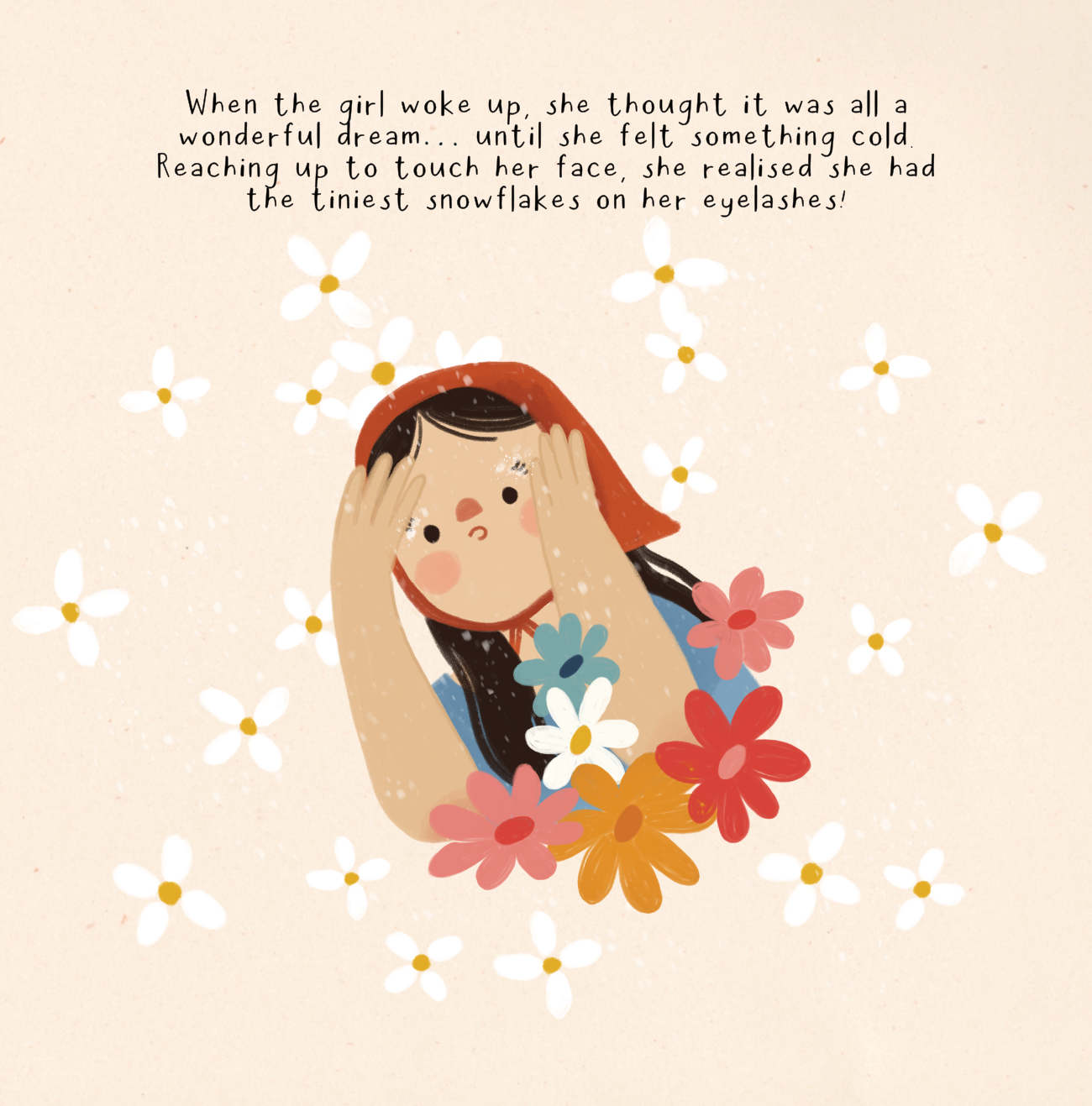
When the girl woke up, she thought it was all a wonderful dream… until she felt something cold
Reaching up to touch her face, she realised she had the tiniest snowflakes on her eyelashes!
Buy the Paperback
Enjoy a screen-free book to share and reread.
The Magical Dream of the Polar Bear
Love the Story? Own the Book.
PS: Your support means the world to us! When you make a purchase through an Amazon link, we may earn a small commission at no additional cost to you. This helps us spread the magic of free stories to children across the globe. Thank you for being a part of the Storyberries family!
Explore the story
Context
Explore the ideas, feelings and learning behind the story.
This original, gently paced picture-book tale begins in an ordinary garden before moving through a child’s extraordinary dreams. Its repeating changes of day and night make the dream feel expansive, while the welcoming polar bear gives the story an emotional centre.
On their journey, the girl and the bear cooperate: she reads an ever-changing map and he rows their boat. The pictures introduce ice floes, a glacier, walruses, a narwhal and colourful auroras. The map also carries Antarctic place names, so it is best understood as a playful dream map rather than a scientifically accurate map of the Arctic.
The Northern Lights bring the story to a quiet pause, and the last snowflakes invite children to wonder where imagination ends and reality begins. The story is useful for talking about helping others, naming feelings and noticing the difference between imagined scenes and real natural phenomena.
Vocabulary
Discover useful new words and what they mean.
- Floe
- A flat sheet of ice that floats on water.
- Narwhal
- An Arctic whale with a long, spiral tusk.
- Isobars
- Lines on a weather map joining places with equal air pressure.
- Glacier
- A huge mass of ice that moves slowly over land.
- Walruses
- Large Arctic marine mammals with whiskers and long tusks.
- Terns
- Seabirds with slender wings, often seen near coasts.
- Puffins
- Small seabirds with bright, colourful bills.
- Gnat
- A very small flying insect.
Discussion questions
Use the story to spark thoughtful, imaginative conversations.
Helping
- Why does the polar bear need someone to read the map?
- What does the girl do to help while the polar bear rows?
- When have you and a friend used different skills to finish something together?
Imagination
- What happens in the girl’s dreams before she meets the polar bear?
- Which place or creature on the magical map would you like to see?
- What would change on a map that could come alive beneath your fingers?
Journeys
- What places and animals do they encounter on the way to the Northern Lights?
- Why do you think watching the lights together feels special?
- If you could travel with an animal friend, where would you go?
Feelings
- How might the girl feel when the polar bear first hugs her?
- What feelings do you imagine as the two watch the lights under the stars?
- How would you feel if you woke with a little piece of your dream beside you?
Frequently Asked Questions
Helpful answers for parents and teachers.
What happens in The Magical Dream of the Polar Bear?
A girl falls asleep in her garden and dreams of circuses among the clouds, enormous flowers and a gentle polar bear on the ice. The bear wants to see the Northern Lights but needs someone to read his magical map while he rows. They travel together, meet a narwhal and watch the glowing sky. When the girl wakes, tiny snowflakes remain on her eyelashes.
Why does the polar bear ask the girl for help?
The polar bear has built a boat to watch the Northern Lights, but he cannot row and study the map at the same time. The girl can read the map while he steers them across the icy water. Their different jobs make the journey possible. This is a practical way to discuss helping: sometimes contributing one small skill is exactly what another person needs.
What makes the map in the story magical?
The map shows unfamiliar places, undersea creatures, ice caves, whale trails and lines marking Arctic storms. Most unusually, its features move and change under the girl’s fingers. Children can notice the difference between an ordinary map, which records places, and this imaginative map, which seems alive. Invite them to invent one new feature that might appear when the girl touches it.
What are the Northern Lights?
The Northern Lights, also called the aurora borealis, are real shifting lights that sometimes appear in the sky at high northern latitudes. They occur when energetic particles associated with the Sun interact with gases high in Earth’s atmosphere. In this story, the lights are the beautiful destination of a dream journey. You can explore the science with the Australian Bureau of Meteorology’s aurora explanation.
Are the polar animals and ice landscapes realistic?
Polar bears, narwhals, walruses, glaciers and floating ice are real, even though the friendly, talking bear and living map are imaginary. The illustrated map also names locations such as Mount Erebus and Lake Vostok, which should not all be treated as locations in the Arctic. For example, NASA identifies Mount Erebus as an Antarctic volcano. Use a globe or atlas to compare the real poles with the dream journey.
What does the snowflake ending suggest?
When the girl wakes in her flower-filled garden, she finds tiny snowflakes on her eyelashes. The story does not explain exactly how they arrived. Children may enjoy wondering whether the dream touched the real world, or whether the ending simply keeps the magic alive. Ask what other small clue might make them wonder if an imaginary adventure really happened.
Is this a calming story to share before bed?
The story has a gentle pace, a warm friendship and a quiet ending beneath the stars, so it may suit a calm bedtime routine. Its dream scenes contain unusual places but no frightening conflict. Young children may particularly enjoy the bear’s comforting hug. You could read the pages slowly and pause at the Northern Lights illustration before turning to the final snowflake surprise.
Which new words can children learn from the story?
The journey introduces words such as floes, glacier, narwhal, walruses, terns and isobars. Each can be explained briefly as the corresponding picture appears, rather than turning bedtime into a long vocabulary lesson. For example, a floe is a sheet of floating ice, while isobars are lines on a weather map. Invite children to spot the word’s meaning in the illustration.
How can teachers use the story to explore teamwork and emotions?
The girl and the bear share a clear goal but have different roles: one reads the map and the other rows. Children can identify what each character contributes and how they might feel when they finally see the lights together. A partner activity using a simple treasure map can extend the idea. The Storyberries Feelings collection offers more prompts for naming emotions.
What creative activities can follow the story?
Children might draw a map with places that change, paint the Northern Lights with sweeping colours, or invent an animal companion for another dream journey. A second option is to draw the girl’s garden before and after her dream, including the surprise snowflakes. For more imaginative prompts, browse Storyberries’ Imagination stories and compare how other tales use make-believe.
Credits
Meet the people who brought The Magical Dream of the Polar Bear to life.
Written by: Jade Maitre
Illustrated by: Yesim Serce
Edited, designed and narrated by: Jade Maitre
Video music sourced from Zapsplat.com.

Copyright © Storyberries