
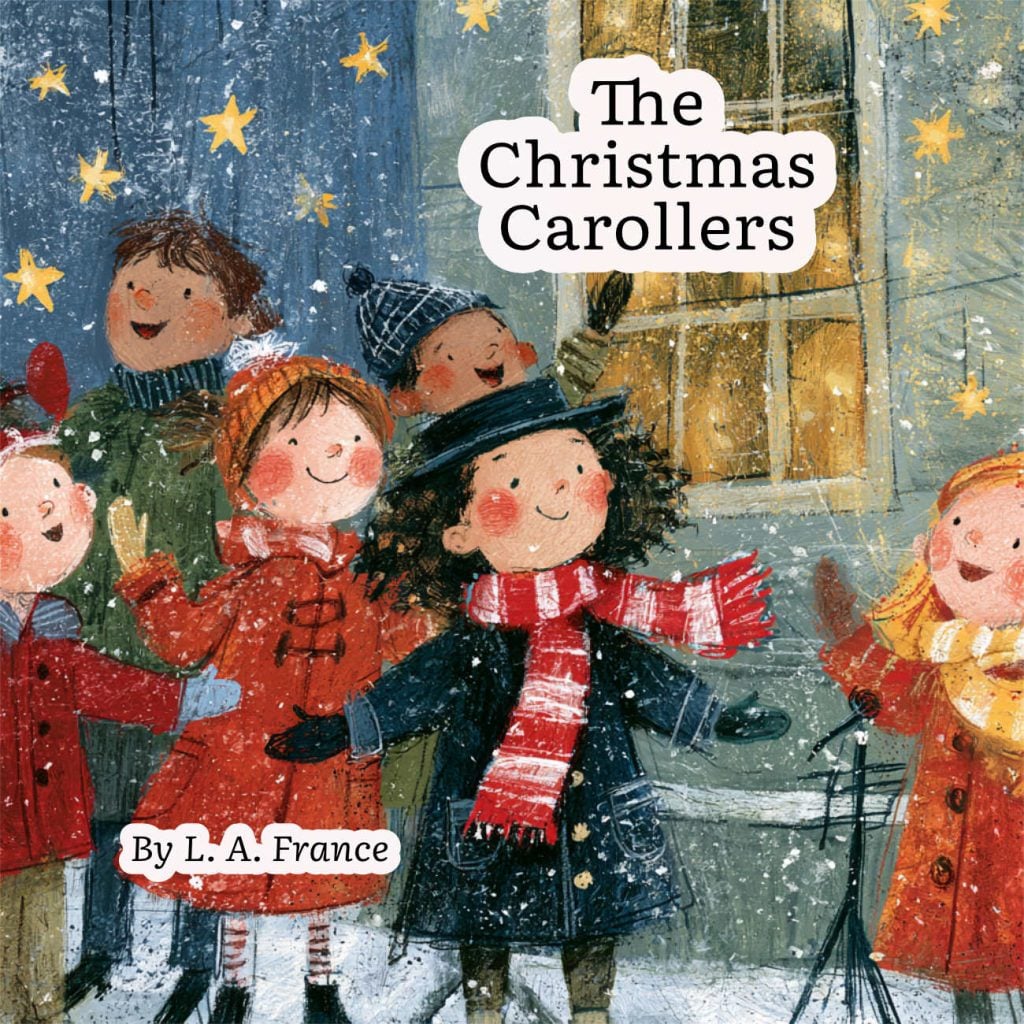
Little Christmas Carollers
A group of cheerful Christmas carollers travels through frost and snow, stopping at houses to offer warm wishes. In this short rhyming Christmas poem for kids, their songs and smiles share peace, hope and kindness with neighbours and everyone they meet along the way.
Read
Read the story at your own pace.
We are a band of carollers,
We march through frost and snow,
But care not for the weather
As on our way we go.
At every hall or cottage
That stands along our way,
We stop to give the people
Best wishes for the day.
We pray a merry Christmas,
Made bright by Christmas cheer,
With peace, and hope, and gladness
And all they may hold dear.
And for all those that happen
To pass us on our way
We have a smile, and wish them
A merry Christmas-day.
Copyright © Storyberries
Explore the story
Context
Explore the ideas, feelings and learning behind the story.
In this traditional-style Christmas poem, a band of carollers moves through a wintry neighbourhood, pausing beside halls and cottages to wish people well. The speakers use “we,” inviting readers to hear the message as a shared voice.
Door-to-door seasonal singing has a long history, although families and communities celebrate Christmas in different ways. Here the carollers offer words, music and smiles rather than presents or payment.
Four short verses, regular end rhymes and repeated references to travelling make the poem useful for reading aloud in groups. The final greeting opens a conversation about how a small gesture can help someone feel included.
Vocabulary
Discover useful new words and what they mean.
- Carollers
- People who sing songs together, especially during Christmas.
- Frost
- A thin layer of ice crystals that forms when it is very cold.
- Cottage
- A small, usually cosy house.
- Cheer
- A feeling of happiness and celebration.
- Gladness
- A feeling of joy or happiness.
- Dear
- Loved or especially important to someone.
Discussion questions
Use the story to spark thoughtful, imaginative conversations.
Tradition
- Why might neighbours enjoy hearing Christmas songs at their doors?
- What do you think the carollers hope to share by visiting each hall or cottage?
- How might the tradition change in a place where Christmas is warm rather than snowy?
Music
- Which words or lines would sound especially good sung aloud, and why?
- If you have sung a Christmas carol, which one do you remember and how did singing it feel?
- What tune or rhythm would you choose for the four short verses?
Kindness
- What kind wishes do the carollers offer to people along their way?
- How can a smile or friendly greeting help someone feel noticed?
- What small act of kindness could you share with someone this Christmas?
Community
- Why do you think the poem mentions both halls and cottages?
- How might people who meet the carollers feel part of a neighbourhood celebration?
- What could your class or family do together to spread good wishes without buying gifts?
Frequently Asked Questions
Helpful answers for parents and teachers.
What happens in Little Christmas Carollers?
A group of carollers walks through frost and snow, stopping beside halls and cottages to wish the people inside a merry Christmas. They also smile at people they pass in the street. The poem follows a simple journey rather than a dramatic plot, showing how greetings, singing and a few kind words can brighten a winter day.
Who is speaking in the poem?
The speakers are the carollers themselves. They repeatedly say “we” and “our,” so readers hear the group speaking together rather than a single child telling a personal story. This collective voice fits the idea of singing as a team. Try having several children read the lines together and notice how the poem sounds different from a solo reading.
Why do the carollers continue despite the cold weather?
The carollers say they march through frost and snow but do not mind the weather. Their enthusiasm comes from the chance to visit others and share seasonal wishes. The poem does not describe a hardship they have to overcome; the cold simply makes their cheerfulness stand out. Ask children what makes an outdoor activity enjoyable even when the weather is uncomfortable.
What do the carollers give people if they are not carrying presents?
They offer best wishes, smiles and hopes for peace, happiness and the things each person holds dear. None of the verses says they give material gifts. That contrast gives families a useful way to talk about generosity without spending money. Children might think of someone who would appreciate a greeting, a song or a kind note.
Where does the custom of singing Christmas carols door to door come from?
Christmas carolling has developed over centuries, including older traditions of festive singing and visiting homes. The poem reflects the familiar practice of taking songs and good wishes through a neighbourhood. English Heritage explains the history of carols and their social settings. To explore this seasonal form further, browse Storyberries’ Christmas Poems collection.
How can children notice the rhyme and rhythm of this Christmas poem?
Read the four-line groups aloud and listen to the endings: “snow” rhymes with “go,” “way” with “day,” and “cheer” with “dear.” The repeated walking-and-greeting pattern also creates a steady movement. Children can clap gently on stressed words, then try changing the reading pace. Storyberries’ Rhyming Poems collection offers more examples to compare.
Which words may need explaining before reading?
Words such as “carollers,” “frost,” “cottage,” “cheer” and “gladness” may be unfamiliar to some children. They are worth explaining because they create the poem’s winter setting and cheerful mood. A caroller is someone who sings seasonal songs, while gladness means happiness. After reading, ask children to point to the line where each word appears and explain it in context.
How could a teacher use this poem in a short classroom lesson?
Divide the class into small groups to read one four-line verse each, then bring everyone together for the final Christmas greeting. Pupils can identify the speaker, underline rhyming words and discuss how the shared voice creates a friendly mood. For a follow-up reading selection, the Classic Children’s Poems collection provides other poems for comparing language and performance.
How can families discuss the poem with children who do not celebrate Christmas?
Explain that the carollers are taking part in a particular Christmas custom, while the wishes for peace, hope and kindness can be discussed by children of many backgrounds. Invite children to describe greetings or songs used in celebrations familiar to them, without asking anyone to represent an entire culture. Storyberries’ Tradition and Culture collection can support wider conversations.
What simple creative activity can children try after reading?
Ask children to write a short greeting for someone in their family, school or neighbourhood, using two or four lines. They might include a wish for peace, hope or happiness, echoing the carollers without copying the full poem. Another option is to draw a winter cottage and imagine what the people inside hear when the singing starts. Either activity makes the poem’s kindness concrete.
Credits
Meet the people who brought Little Christmas Carollers to life.
Poem by L.A. France

Copyright © Storyberries